When Does Your Property Need Parking Line Striping? Signs Owners Should Not Ignore
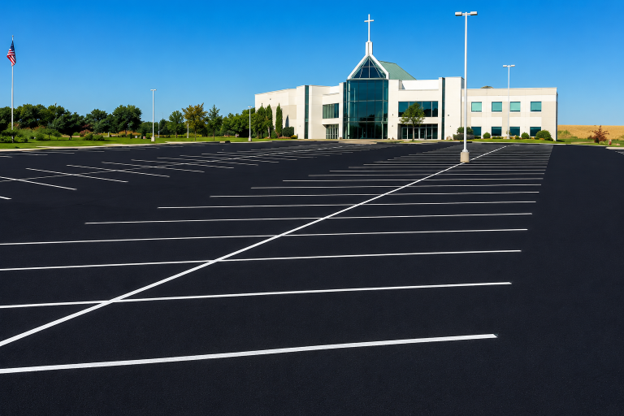
Have you looked at your lot lately and felt that something seems off, even though the asphalt still looks serviceable?
That reaction usually starts with the markings. In many commercial properties, parking line striping fades before owners notice how much work those lines do every day. They guide entry and exit patterns, hold stall widths in place, support pedestrian routes, and help the lot look cared for at first glance. When those lines lose shape, the lot starts working harder than it should. Drivers hesitate. Spaces look uneven. Visitors park with more guesswork. The property still functions, but it stops feeling orderly.
That is why line work deserves a closer look before it disappears. Fresh markings do more than repaint old spaces. They restore flow, sharpen layout logic, and protect the value you already built into the site.
What Happens When Parking Line Striping Starts Wearing Off
A parking lot does not fail all at once. It drifts. The change shows up in small ways first, then spreads through daily use.
Faded Lines Lead to Poor Traffic Direction
Drive aisles depend on visual cues. Arrows, stop bars, entry lanes, and turn guidance all help drivers move with less hesitation. Once parking line striping starts fading near travel paths, people begin making slower, wider, less consistent turns. Delivery vans cut corners. Visitors pause at cross-points. Tenants start improvising.
That kind of drift affects more than movement. It also affects pace. Research on improved road markings found average vehicle speeds dropped by 6% in daytime and 7% at night after better markings were installed. In a property setting, that kind of change supports steadier movement and cleaner circulation.
Unmarked Bays Create Parking Confusion
Parking bays do not need to vanish to create friction. A lot starts feeling inconsistent as soon as stall edges blur. One driver centers the car by habit. Another parks wide because the boundary looks uncertain. Soon, usable width shrinks across an entire row.
This issue shows up often after resurfacing, sealcoating, or heavy seasonal use. Fresh paint can fix it, but layout review matters too. Some owners carry old striping patterns forward without checking vehicle mix, tenant needs, or current traffic loads.
Higher Risk of Minor Accidents and Disputes
Most parking lot disputes do not come from major crashes. They come from low-speed confusion. A driver claims a car crossed a faded lane edge. A shopper says a loading zone looked like a usable stall. A service vehicle blocks a turn path because the curb text almost disappeared.
Good markings reduce that friction. Studies on stronger line markings and delineation have linked them with a 20% to 60% reduction in certain crash types. In commercial lots, that translates into fewer awkward crossings, fewer parking disputes, and better spacing between moving vehicles and parked cars.
Missed ADA Markings Can Lead to Penalties
Accessible parking requires more than one blue symbol near the entrance. Owners need the right count of accessible spaces, proper access aisles, correct van markings, readable symbols, and routes that connect with the entry path. If any of those pieces fade or drift out of place after patching or resurfacing, the lot loses consistency.
This area deserves precision. Contractors should check dimensions, aisle orientation, signage placement, curb access, and symbol size before paint goes down. Many owners focus on stall lines first, but accessible spaces carry more legal and operational weight.
Worn Layouts Affect Property Appearance
A parking lot tells people what kind of property they are walking into. Crisp stall lines, readable fire lanes, crosswalk markings, and curb paint signal upkeep before anyone reaches the door. When those details fade, the site starts looking older than it is.
This is one reason owners often schedule parking lot restriping with sealcoating or light pavement touch-ups. The asphalt may still have life left in it, but the visual finish has already slipped. A fresh layout brings back order fast. It also helps leasing teams, managers, and tenants present the property in a stronger way without a large capital project.
Tenants and Visitors Notice the Neglect
People read surfaces fast. They may never mention the stall angles or crosswalk paint out loud, but they respond to them. A neat lot feels easier to enter, easier to park in, and easier to trust. An uneven one leaves more room for hesitation.
This is also where parking line striping pulls more weight than many owners expect. It affects the first few seconds of arrival. Those seconds shape how people judge upkeep across the rest of the property. For retail, office, medical, industrial, and school sites, that first impression carries value every day.
How Fresh Parking Line Striping Improves Daily Use and Property Value
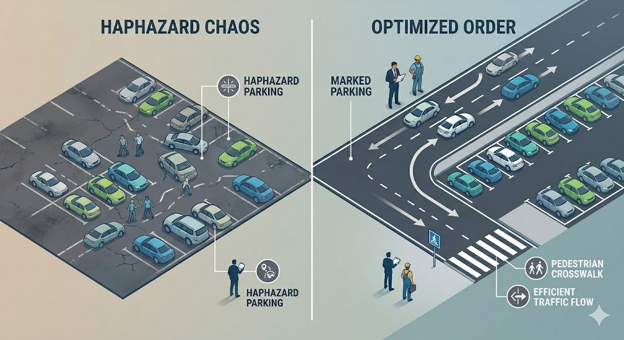
Once owners move past the idea of paint as a maintenance item, the upside becomes easier to see. Good markings do not just refresh the lot. They improve how the property works.
Smoother Vehicle Movement Across the Lot
When the layout reads well, drivers make decisions faster and with less hesitation. Entry lanes feel intentional. Queue points look obvious. Service routes stay separate from visitor parking. That kind of flow helps during busy morning windows, short lunch peaks, and tenant turnover periods.
You also get more from each repaint when the crew revisits traffic movement instead of tracing old lines by habit. In many cases, parking line striping works best when owners review arrow placement, turn radii, loading access, and no-parking zones at the same time.
Better Space Utilisation Without Expansion
Owners often look for more capacity by adding pavement. Many times, they can recover usable order with a stronger layout plan first.
| Layout Check | What It Fixes | What Owners Gain |
|---|---|---|
| Re-centering stall widths | Uneven parking rows | Better fit across the same footprint |
| Adjusting angle parking | Hard entry and exit movement | More efficient circulation |
| Reworking end caps and curb zones | Wasted edges | Cleaner use of corner space |
| Marking loading and short-term areas | Random stopping | Better separation of uses |
This is where lot planning earns its keep. A contractor who measures the site and thinks through circulation can often improve use without changing the property boundary.
Safer Walkways for Pedestrians
Pedestrian routes need more than paint on paper. They need a placement that fits how people actually move. Shoppers take shortcuts. Staff members cross near the side doors. Parents head for the nearest ramp. If the marked path ignores those habits, the striping loses value.
That is why crosswalk markings, stop bars, speed humps, curb text, and accessible route markings should work together. A good crew checks sight lines, door locations, lighting, and curb transitions before laying out the walk path.
Why Property Owners Choose Yellow Dawg Striping
Yellow Dawg Striping appeals to owners who want more than a repaint crew. The company ties its service to asphalt-specific layouts, ADA support, fresh markings for new or resurfaced lots, and broader pavement care through the Jet-Black network. That gives owners one source for striping plus related surface work when the lot needs more than paint.
We like that Yellow Dawg handles both new layout work and parking lot restriping for existing sites, because that helps owners update traffic flow, fire lanes, numbering, and accessibility markings in one project. We also like the mix of local execution and larger network support, especially for owners who manage several properties or plan work in phases.
Key strengths include:
● Asphalt-focused striping for new and existing paved lots
● ADA markings, directional arrows, fire lanes, numbering, and custom stencils
● Free written quotes and traffic paint built for lasting visibility
● Access to sealcoating, crackfilling, patchwork, and paving support when needed
What to Check Before Hiring a Parking Line Striping Contractor
Start with layout discipline, not price. Ask who measures the lot. Ask whether the crew will review stall geometry, traffic direction, pedestrian routes, and accessible spaces before painting. If the answer sounds rushed, move on.
Then ask about surface prep. A solid contractor should explain cleaning, drying time, paint type, curing window, phasing, and how the team will handle active traffic while work happens. Owners should also ask who verifies ADA details and whether the quote includes arrows, curb text, fire lanes, crosswalks, and stencil work.
Finally, review the proposal for scope. Good contractors separate repainting from redesign so you know what you are buying. They explain where a fresh layout makes more sense than tracing old lines.
Conclusion
A parking lot can stay busy and still lose efficiency one faded line at a time. Owners who act early usually get better flow, cleaner use of space, stronger curb appeal, and a lot that feels easier to move through from the first turn in. If your site looks due for parking line striping, now is the right time to review the layout, refresh the markings, and schedule the work before the next busy cycle. Contact Yellow Dawg Striping today and we will help you map the next phase for your property.
FAQs
-
Most properties review markings every 12 to 24 months. Heavy traffic, snow service, strong sun, sealcoating cycles, and frequent truck movement can shorten that window.
-
Yes. Many crews phase the job by section. That lets owners keep part of the lot open while the team finishes high-priority rows, walkways, or loading areas first.
-
Yes, in most cases. A fresh sealcoat changes surface appearance and covers old markings, so owners usually get the best result when they repaint soon after the coating cures.
-
Many contractors can add directional arrows, fire lanes, curb text, accessible symbols, numbered stalls, loading zones, crosswalks, and custom stencils for site-specific use.
-
Yes. Surface temperature, moisture, traffic load, snow removal, and UV exposure all affect wear rate. Good prep and proper cure time usually extend paint life and keep visibility stronger for longer.