
Before You Stripe: A Property Owner's Guide to Asphalt Line Striping
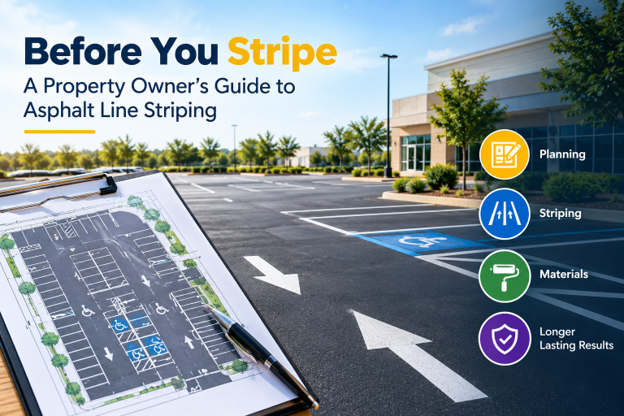
New asphalt looks clean on its own, but it doesn't organize traffic until lines are added. And an older lot with worn markings can look neglected even if the pavement underneath is in decent shape.
Either way, asphalt pavement line striping is what turns a flat surface into a functional parking lot, and getting it right takes more planning than most property owners expect.
Before paint goes down, there are a few things worth understanding: how layout planning works, what separates a first-time install from a restripe, and what keeps markings looking sharp once the project is done.
Layout Comes Before Paint
A lot of property owners assume striping is just repainting the same lines that were there before. For a simple restripe, that's often true. But for new asphalt, or a property that's changed how it's used, layout planning has to happen first.
A solid parking lot striping layout accounts for:
Total available space and how many spaces the lot can realistically support
Traffic flow, including entry points, exit points, and main drive aisles
Parking lot directional markings that guide vehicles through the lot without confusion
Accessible spaces and the access aisles required next to them
Parking lot curb striping for no-parking zones, loading areas, or pedestrian paths
Getting the layout right matters more than people think. A lot that's striped without a clear plan can end up with awkward turning radiuses, spaces that are hard to back out of, or a traffic pattern that doesn't match how people actually drive through the property. Once lines are painted, changing the layout means repainting, so it's worth getting this step right the first time.
For larger properties, parking lot numbering and striping is often part of this same planning stage, especially for reserved spaces, tenant parking, or properties that need a way to track specific spots.
New Installation vs. Re-Striping
Asphalt pavement line striping generally falls into two categories, and the process looks different depending on which one applies.
New installation starts with a blank surface. This involves full layout design, marking out spaces, arrows, and zones from scratch, and applying the first set of lines to newly paved or resurfaced asphalt. Since there's no existing layout to reference, this is where planning matters most.
Re-striping works with an existing layout that's faded or worn down. In many cases, parking lot re-striping is a matter of refreshing what's already there. But if the property's needs have changed since the original striping, whether that means more spaces, a different traffic pattern, or new accessibility requirements, re-striping can also be a chance to adjust the layout rather than simply repaint it as-is.
Property owners planning a restripe should walk the lot first and note where markings have faded most, since heavy-traffic areas like main aisles and entrances typically wear down faster than the rest of the lot.
What Affects How Long Markings Last
Once striping is complete, how long it holds up depends on a few factors:
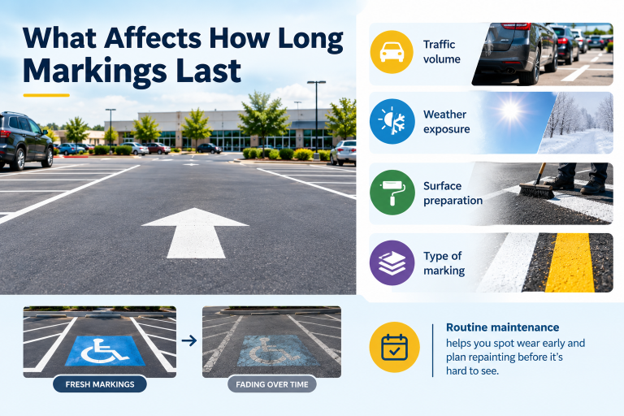
Traffic volume, since high-use areas naturally see more wear
Weather exposure, particularly sun and freeze-thaw cycles in colder climates
Surface preparation before painting, which affects how well paint adheres
The type of marking, as some materials hold up longer under heavy use than others
None of these factors are unusual, and some fading over time is normal. The goal isn't to avoid it entirely, but to catch it before markings become difficult to see. Routine parking lot striping maintenance, checking the lot periodically for fading arrows, worn curb markings, or hard-to-see accessible spaces, makes it easier to plan repainting before the lot starts to look unclear.
When markings do wear down to the point of being hard to read, parking lot striping repair or a full parking lot striping repainting project can restore visibility without requiring a complete layout overhaul.
Questions Worth Asking Before You Start
Before starting a striping project, it helps to have a few answers ready:
Is this a new installation or a restripe of an existing layout?
Does the current layout still make sense for how the property is used today?
Are there specific requirements, like accessible spaces or fire lanes, that need to be accounted for?
What's the timeline, and does the surface need to be prepped or cleaned beforehand?
A contractor experienced in commercial parking lot striping should be able to walk through these questions with you and explain how they'd approach the layout, not just the painting.
Yellow Dawg Striping works with property owners on both new installations and re-striping projects, handling everything from layout planning to parking lot striping installation and ongoing maintenance.
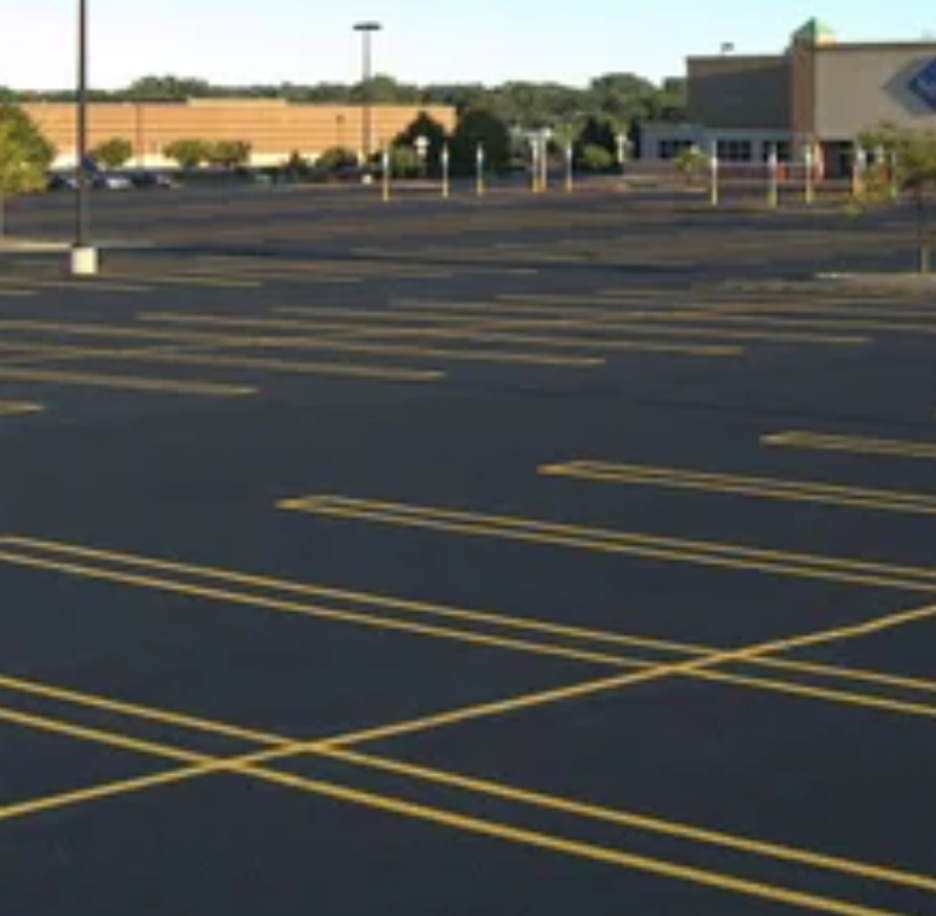
Whether you're starting with fresh asphalt or refreshing a lot that's due for an update, we can help make sure the plan fits how your property actually gets used, not just how it looked the last time it was painted.
FAQs
-
A new installation typically starts with a newly paved or resurfaced area that needs its layout and markings established. Re-striping works with an existing layout, refreshing faded lines or adjusting the layout if the property's needs have changed.
-
Most parking lots benefit from repainting every one to two years, although high-traffic properties may need more frequent maintenance. Traffic volume, weather, surface preparation, and marking materials can all affect how long the markings remain visible.
-
That depends on whether the current layout still fits how the property is used. If traffic patterns or space needs have changed since the last striping project, re-striping can be a chance to adjust the layout rather than repaint it as-is.
-
Periodic checks, especially in high-traffic areas, make it easier to catch fading before it becomes hard to see. Routine maintenance is generally easier and less disruptive than waiting for a full repaint.
Conclusion
Whether you're striping new asphalt or refreshing a lot that's due for an update, the process works best when layout planning comes before paint.
Understanding the difference between a new installation and a re-striping project, and knowing what affects how long markings last, puts property owners in a better position to plan ahead instead of reacting to a lot that's already hard to read.
Yellow Dawg Striping works with properties on both new installations and re-striping projects, helping make sure the layout matches how the property is actually used.