

Most parking lots don’t have a space problem. They have a movement problem. Drivers hesitate at entrances, cut across stalls, or meet head-on in narrow aisles, and the lot feels cramped even when it isn’t full.
The fix is often simpler than a full redesign. Clear parking guidance pavement markings can organize circulation, protect pedestrians, and keep every stall usable. This post explains how.
How Do Entry and Exit Routes Shape Traffic Flow?
Entrances and exits set the tone for the whole lot. If drivers can’t tell where to enter, where to leave, or who has the right of way, confusion spreads inward.
Start by watching how vehicles actually move. Look at where they queue, where they stop suddenly, and where they take shortcuts. Those habits show you where the layout isn’t communicating.
Simple tools help here:
Stop bars and “Stop” legends at exits
Arrows that separate entering and exiting lanes
Center lines or lane dividers on wider drive lanes
Clear spacing between the driveway and the first row of stalls
Keep the first stalls near an entrance back from the driveway where possible. A car backing out right at the entry point can block traffic onto the street.
When Do One-Way Aisles Make Sense?
One-way aisles work well when a lot is tight, has angled parking, or sees heavy turnover, like a retail center or a pickup zone. Angled stalls guide drivers in one direction, and arrows reinforce it.
They can also save space. A one-way aisle usually needs less width than a two-way aisle, which can free room for extra stalls, a walkway, or a loading area.
They don’t suit every property. If a lot has several entrances, odd corners, or delivery traffic, forcing one direction can create long detours. Test the route mentally from the driver’s seat first: can someone who misses a turn still find their way out without a U-turn?
If you do choose one-way flow, repeat the message. A single arrow at the start of an aisle is easy to miss. Add arrows at regular intervals and pair them with signage where needed.
What About Turning Areas and Dead Ends?
Dead-end aisles are one of the most common sources of frustration. A driver reaches the end, finds no space, and has to reverse out through other cars.
A few fixes help without rebuilding anything:
Mark a hatched turnaround zone at the end of long dead-end aisles
Use “no parking” striping at corners where vehicles need room to swing
Keep end-cap areas clear of stalls that block sight lines
Hatched areas look like wasted pavement, but they often prevent the kind of blockage that makes the rest of the lot feel unusable. Used sparingly, they protect more space than they take.
How Should You Plan Pedestrian Crossings?
People walk from their cars to the entrance in the shortest line, not the safest one. If the layout doesn’t give them a path, they will make their own through traffic lanes.
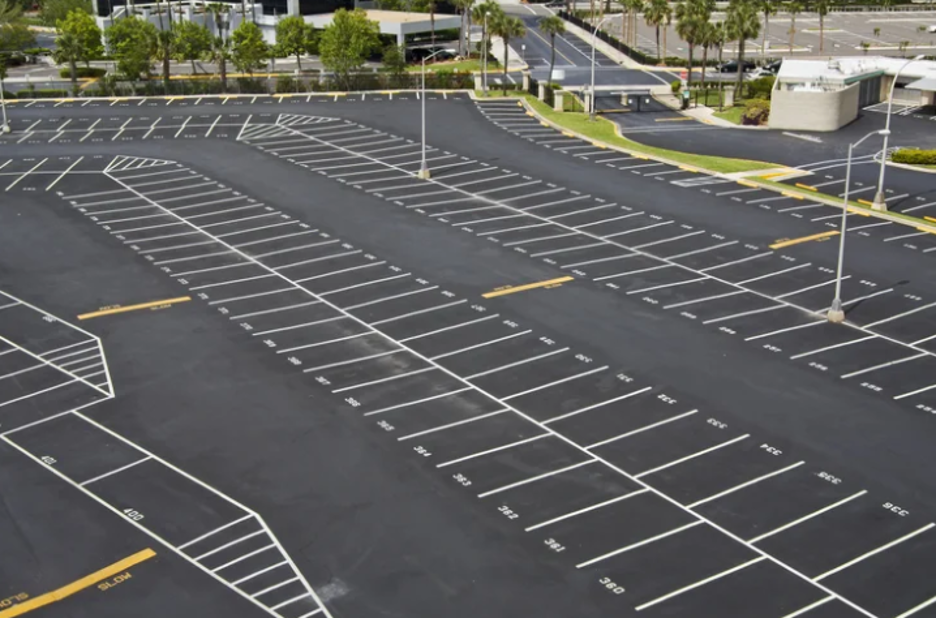
Mark crosswalks where people naturally walk: between the main entrance and the nearest rows, across drive lanes, and along the route from accessible stalls to the building. Place them where drivers can see pedestrians early, not right after a blind turn.
Common Parking Lot Layout Mistakes
Many layout problems repeat from one property to the next.
Here are the most common ones and what usually fixes them.
| Mistake | What it causes | Practical fix |
|---|---|---|
| Faded or missing arrows | Drivers going the wrong way | Restripe arrows and add repeats |
| Aisles too tight for the stall angle | Slow, awkward maneuvers | Review angle and aisle width |
| Crosswalks in blind spots | Close calls with pedestrians | Move or add visible crossings |
| No turnaround at dead ends | Reversing into traffic | Add hatched turning zones |
| Unmarked fire lanes or loading zones | Blocked access, confusion | Mark clearly with proper striping |
Overcrowding is another frequent issue. Adding extra stalls can feel like a smart way to use space, but narrow stalls and tight aisles slow everyone down. A slightly smaller lot that moves well often feels bigger than a packed one that doesn’t.
How Parking Guidance Pavement Markings Improve Circulation
Think of markings as the lot’s instructions. Drivers rarely read signs carefully, but they notice lines, arrows, and symbols right in front of them.
Well-planned parking guidance pavement markings can direct drivers to the right lane, separate pedestrians from vehicles, and make stall boundaries obvious. They also support the details that keep a lot running smoothly: parking lot directional markings, parking lot numbering and striping, curb striping, and fire lane markings.
The best part is that these upgrades often work within your existing pavement. Before changing the footprint, ask whether clearer markings could solve the problem first. A thoughtful parking striping layout design can sometimes recover stalls, simplify turns, and reduce conflict points with no construction at all.
Does Your Lot Need Restriping or a Full Redesign?
Not every lot needs to start over. A few signs help you decide.
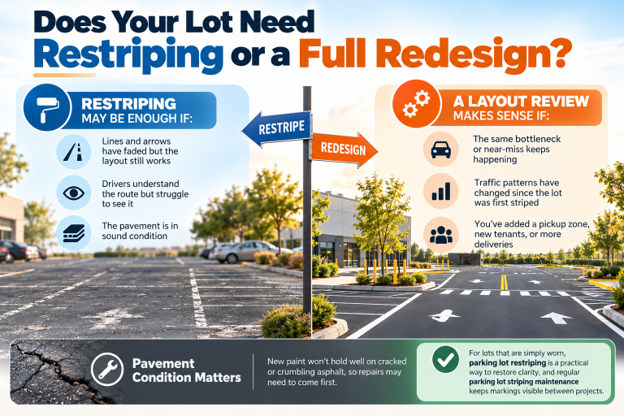
Restriping may be enough if:
Lines and arrows have faded but the layout still works
Drivers understand the route but struggle to see it
The pavement is in sound condition
A layout review makes sense if:
The same bottleneck or near-miss keeps happening
Traffic patterns have changed since the lot was first striped
You’ve added a pickup zone, new tenants, or more deliveries
Pavement condition matters too. New paint won’t hold well on cracked or crumbling asphalt, so repairs may need to come first. For lots that are simply worn, parking lot restriping is a practical way to restore clarity, and regular parking lot striping maintenance keeps markings visible between projects.
FAQs
-
It depends on the lot’s size, shape, and use. Most efficient layouts separate entering and exiting traffic, keep aisles clear, and give pedestrians a visible route. An on-site review usually shows what will work best.
-
One-way aisles can save width and improve flow, especially with angled stalls. Two-way aisles are often better for lots with multiple exits or irregular shapes.
-
Often, yes. Clear arrows, crosswalks, and stall lines solve many circulation problems without changing the lot’s footprint. Persistent issues may need a layout adjustment.
-
There’s no fixed schedule. Traffic volume, weather, and pavement condition all affect how fast markings fade. Walk the lot regularly and restripe when lines or arrows become hard to see.
-
Not necessarily, but any lot with regular foot traffic across drive lanes benefits from marked crossings placed where drivers can see pedestrians early.
Make Your Lot Easier to Navigate
A parking lot that flows well doesn’t need extra space. It needs clear direction. Review your entrances, aisles, turning areas, and crossings, then look for the quick wins first.
If you’re not sure where to begin, Yellow Dawg Striping can assess your layout and explain how parking guidance pavement markings might improve movement on your property.